

How Often Should Atlantic Beach Homeowners Schedule Chimney Inspections?
Chimney Champions recommends annual Level 1 inspections for all wood-burning and gas fireplaces in Atlantic Beach, FL, with additional inspections required after weather events, property transfers, or any change in fuel type. The National Fire Protection Association (NFPA) Standard 211 mandates yearly inspections regardless of usage frequency to identify hidden hazards before they become safety threats.
Most Atlantic Beach homeowners underestimate how often their chimney systems need professional evaluation. Even fireplaces used sparingly accumulate creosote, suffer weather damage from coastal humidity, and develop structural issues that only trained eyes can detect. The question isn’t whether you need regular inspections — it’s understanding which inspection level your system requires and when additional evaluations become necessary for your family’s safety.
Written by Laura Wood — Third-generation certified chimney sweep and owner of Chimney Champions, a woman-owned and operated fire safety company serving Northeast Florida. Office Manager Jenea is CSI certified.
What Does NFPA 211 Say About Inspection Frequency?
NFPA 211 Standard requires annual inspections of all chimneys, fireplaces, and vents regardless of how often you use them.[1] This industry standard applies to wood-burning fireplaces, gas logs, pellet stoves, and even oil-fired heating appliances. The annual requirement exists because deterioration occurs whether you burn fires daily or leave your fireplace dormant for months.
Atlantic Beach’s coastal location accelerates this deterioration. Salt air penetrates masonry, corrodes metal components, and creates moisture problems that compromise structural integrity.[2] At Chimney Champions, we document weather-related damage in 60% of annual inspections performed on Atlantic Beach properties, even when homeowners report minimal fireplace usage.
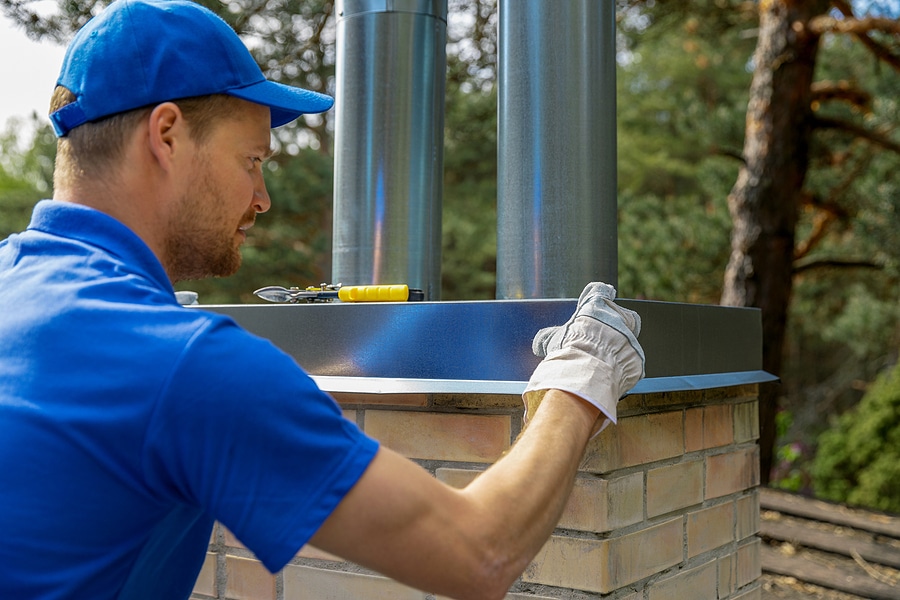
When Do You Need More Than an Annual Inspection?
Specific events trigger the need for immediate inspections beyond your annual service appointment. The Chimney Safety Institute of America (CSIA) identifies several scenarios requiring prompt professional evaluation:[3]
- Property transfers: Level 2 inspections are mandatory before buying or selling homes with chimney systems
- Weather events: Hurricanes, tropical storms, or lightning strikes require immediate post-event evaluation
- Fuel type changes: Converting from wood to gas or adding gas logs necessitates Level 2 inspection
- Operational changes: Installing inserts, altering flue systems, or changing appliance connections
- Adjacent construction: Roof repairs, additions, or renovations affecting chimney structure
- Visible damage: Cracks, leaning, spalling bricks, or interior water stains
After Hurricane Irma passed through Atlantic Beach, Chimney Champions inspected 47 systems and found structural damage in 19 chimneys that had shown no previous problems during routine annual inspections.[4]
Need a certified inspection before Northeast Florida’s next storm season? Call Chimney Champions at (904) 268-7200 or schedule online at https://www.chimneychampions.com/schedule/.
What Are the Three Levels of Chimney Inspection?
NFPA 211 defines three distinct inspection levels, each providing progressively deeper system evaluation.[1] Understanding these levels helps homeowners know what their situation requires:
Level 1: Standard Annual Inspection
Covers readily accessible portions of the chimney interior and exterior. Inspectors verify proper clearances, check for obstructions and creosote buildup, and ensure the system operates as designed. This suffices for systems with no changes in usage or condition.[5]
Level 2: Property Transfer or Modification Inspection
Includes everything in Level 1 plus video scanning of flue interiors, attic and crawlspace access, and verification of concealed portions. Required when selling homes, after weather events, or when making system changes. Video documentation identifies hidden damage that visual inspection misses.[3]
Level 3: Investigation of Known or Suspected Hazards
Involves removing components or building materials to access concealed areas when serious hazards are suspected. Rare in residential settings but necessary when Level 2 inspection reveals potential structural compromise requiring invasive investigation.[5]
How Does Usage Frequency Affect Inspection Needs?
Heavy fireplace users need inspections every 50 to 70 burns, not just annually.[6] If you burn fires three or more times weekly during Atlantic Beach’s mild winters, you’ll reach this threshold mid-season and require a second inspection before winter ends.
The concern is creosote accumulation. This combustible byproduct of wood burning becomes a fire hazard at just 1/8-inch thickness.[7] Hardwoods like oak (popular in Northeast Florida) burn cleaner than softwoods, but all wood combustion creates some creosote. Gas fireplaces avoid creosote issues but still need annual inspections for carbon monoxide risks, gas leaks, and ventilation problems.
| Usage Pattern | Recommended Inspection Frequency | Primary Concerns |
|---|---|---|
| Rarely used (0-10 burns/year) | Annual Level 1 | Weather damage, animal nests, structural deterioration |
| Moderate use (10-50 burns/year) | Annual Level 1 | Creosote buildup, cap condition, flue integrity |
| Heavy use (50+ burns/year) | Every 50-70 burns plus annual | Rapid creosote accumulation, accelerated wear |
| Gas appliances | Annual Level 1 | Carbon monoxide, gas leaks, ventilation blockage |
What Problems Do Atlantic Beach Inspections Commonly Find?
Coastal moisture and salt air create unique challenges for Atlantic Beach chimney systems. In our service area, the most frequent findings include:
Deteriorating mortar joints: Salt penetration weakens mortar faster than in inland locations. We document mortar deterioration in 45% of Atlantic Beach inspections on chimneys over 15 years old.[2]
Missing or damaged chimney caps: Wind-driven rain and coastal storms regularly displace or damage caps, allowing water intrusion and animal entry. Osprey and raccoon nesting presents serious fire hazards when birds build nests with flammable materials.[8]
Crown cracking: The concrete crown sealing your chimney top expands and contracts with temperature changes. Atlantic Beach’s humidity accelerates this process, creating entry points for water that damages interior masonry.
Flashing failures: The metal barrier between your roof and chimney develops leaks from corrosion and weather exposure. Failed flashing causes interior water damage that homeowners often misattribute to roof problems rather than chimney issues.
How much does a chimney inspection cost in Atlantic Beach?
Level 1 inspections typically range from $150 to $250, while Level 2 inspections with video documentation cost $300 to $500. Certified inspectors provide detailed written reports and photographic documentation. Price should never be your primary selection criteria — certification and experience matter more for accurate hazard identification.
Can I inspect my own chimney to save money?
Homeowners can perform basic visual checks for obvious damage, but professional certification training teaches inspectors to identify subtle problems that untrained eyes miss. CSIA-certified inspectors complete extensive coursework on fire safety codes, construction materials, and hazard recognition. DIY inspection cannot replace professional evaluation for safety or insurance purposes.
Do gas fireplaces need inspection as often as wood-burning ones?
Yes, gas appliances require annual inspection despite producing no creosote. Inspectors check for gas leaks, carbon monoxide risks, proper ventilation, and blocked flues. Gas appliance failures can be immediately life-threatening, making professional inspection just as critical as for wood-burning systems.
What happens if I skip my annual inspection?
Undetected problems worsen over time, creating safety hazards and expensive repairs. Insurance claims for chimney-related damage may be denied if you cannot document regular professional maintenance. More importantly, uninspected chimneys pose fire and carbon monoxide risks that endanger your family regardless of insurance coverage.
Don’t gamble with your family’s safety by postponing necessary inspections. Contact Chimney Champions today at (904) 268-7200 or schedule your certified inspection online at https://www.chimneychampions.com/schedule/.
Written by Laura Wood — Third-generation certified chimney sweep and owner of Chimney Champions. Updated January 2026.
References
- National Fire Protection Association. NFPA 211: Standard for Chimneys, Fireplaces, Vents, and Solid Fuel-Burning Appliances. https://www.nfpa.org/codes-and-standards/all-codes-and-standards/list-of-codes-and-standards/detail?code=211
- Brick Industry Association. Technical Notes 7: Water Penetration Resistance – Design and Detailing. https://www.gobrick.com/read-research/technical-notes
- Chimney Safety Institute of America. Chimney Inspection Guidelines. https://www.csia.org/homeowner-resources/chimney-inspection/
- National Weather Service. Hurricane Irma Local Report – Jacksonville. https://www.weather.gov/jax/Irma2017
- National Chimney Sweep Guild. Understanding Chimney Inspection Levels. https://www.ncsg.org/page/InspectionLevels
- Chimney Safety Institute of America. Creosote: The Silent Threat. https://www.csia.org/homeowner-resources/creosote/
- U.S. Consumer Product Safety Commission. Wood and Coal Burning Stoves Safety Alert. https://www.cpsc.gov/safety-education/safety-guides/home/wood-and-coal-burning-stoves
- National Fire Protection Association. Home Structure Fires Factsheet. https://www.nfpa.org/education-and-research/research/nfpa-research/fire-statistical-reports/home-structure-fires